How to Choose a Hi-Vis Winter Jacket ——A Complete Workwear Guide
When picking out a hi-vis winter work jacket, it is easy to be drawn in by bright color schemes and low price tags. But a jacket that actually earns its keep needs to do three things well: deliver reliable warmth, carry verified high-visibility safety certification, and offer the practical details that support a worker through a full shift. In this guide, we walk you through what to check when you choose — and why Fonirra delivers on every one of those points where many cheaper options fall short.

When shopping for a high visibility winter jacket for US construction sites, the core benchmark to check is ANSI/ISEA 107-2020, the latest American national standard for high-visibility safety apparel. It defines requirements for fluorescent background fabric, retroreflective tape placement, color fastness and overall garment durability, so workers stay recognizable in daylight and under vehicle headlights after dark. The standard sorts garments into Types and Performance Classes to match different site risks: Class 1 is the lowest protection level, for low-risk areas with light traffic and ample separation between workers and vehicles; Class 2 suits moderate traffic zones; Class 3 delivers full-body silhouette recognition for high-speed roadwork and low-light night shifts.

Crucially, winter insulated jackets must still meet the minimum material and reflective-area rules of this standard — extra lining and warmth cannot compromise visibility compliance, which is mandatory for most US roadway and construction job sites. A protection class printed on the hang tag does not equal real compliance; many low-cost suppliers shrink the reflective tape width to cut costs. Always verify the official test report before you buy. Fonirra is manufactured to carry ANSI/ISEA 107-2020 certification that you can cross-check with an independent test document.
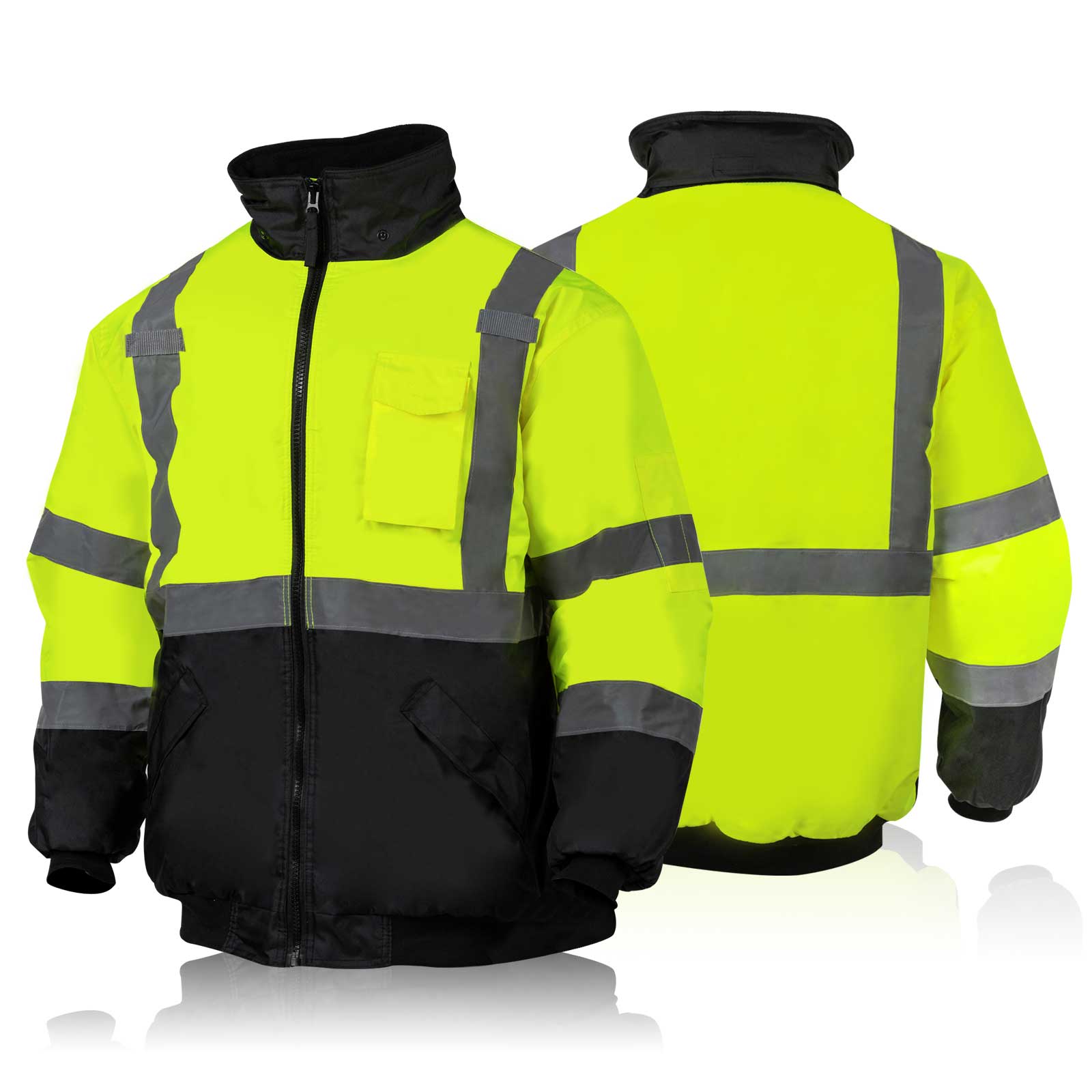
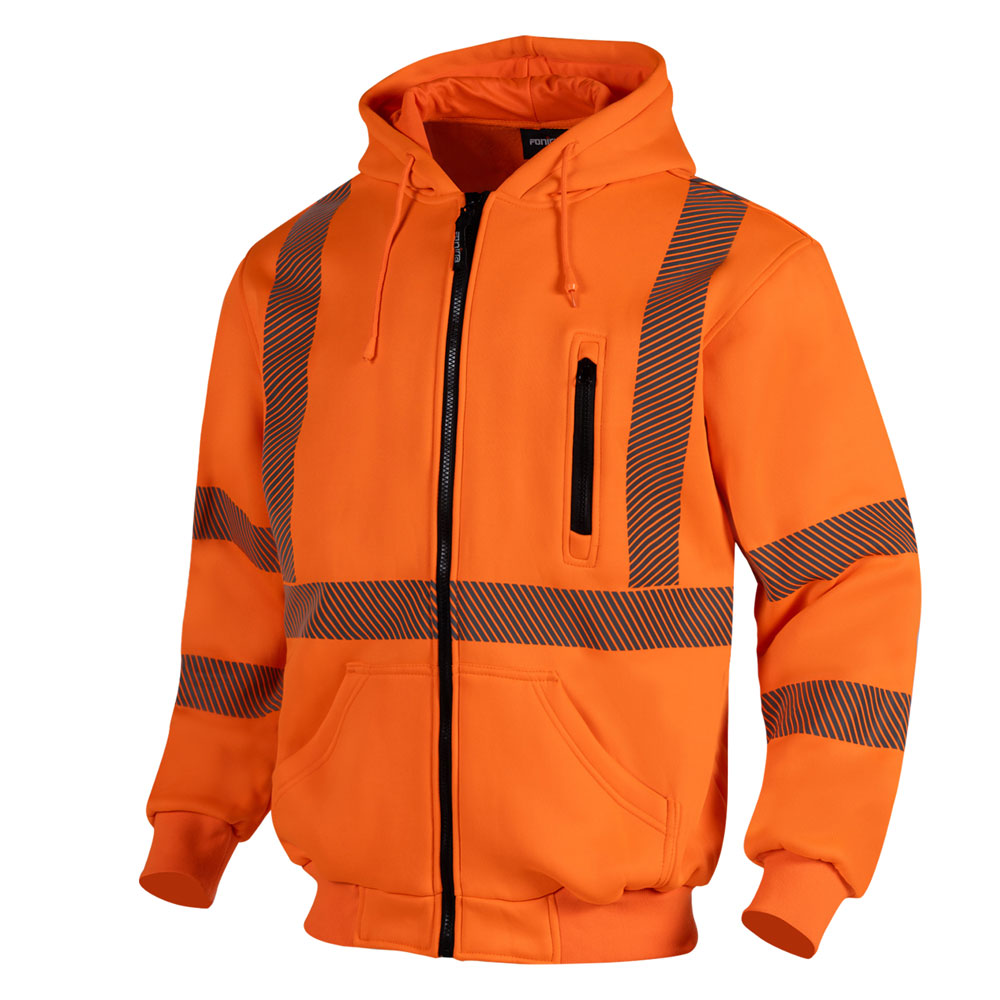
The most overlooked difference between hi-vis jackets is the fabric construction — and this is exactly where Fonirra sets itself apart. For example, the JK50 hi vis jacket lining is made of 240gsm thickened Polar fleece, a heavier, denser fleece than what most budget competitors use. This hi-vis hooded jacket with a Polar fleece lining locks in warmth in cold weather while staying breathable, so workers stay warm on the job without overheating during active work. It is ideal for outdoor winter worksites, warehouse operations and transportation tasks. The heavier fleece and reinforced shell stitching also hold up far better across repeated industrial washings than the thinner, low-grade linings found on cheaper models.

Winter weather rarely cooperates, and a jacket that cannot keep out rain, sleet or melting snow stops doing its job halfway through a shift. Fonirra adds a weatherproof layer on top of its warmth: the JK50 features a highly durable 300D Oxford outer shell with a PU coating that is both waterproof and windproof, so rain beads up and rolls off while wind and moisture stay out.

So why chooseFonirra over other hi-vis winter jackets? A water-repellent shell for wet weather, and worker-first details like deep hand pockets, elastic cuffs and a durable full-length zipper. Where ordinary jackets save money by thinning the reflective tape or using low-grade insulation, Fonirra keeps every performance layer intact — giving you a jacket that stays compliant, warm and durable for far longer than its price suggests.

We also offer two custom branding options for team workwear to fit different needs. Hand-stitched logos are our premium customization choice, delivering refined texture and a high-end look, ideal for enterprises with strict brand image standards. During stitching we avoid the retroreflective tape areas with neat stitching, so the ANSI compliance of the jacket stays intact. If you are working with a limited budget or only need the garments for short-term use, reflective heat transfer printing is a practical alternative. One non-negotiable rule: custom logos must never cover the mandatory retroreflective strips — covering the silver reflective tape immediately invalidates the ANSI certification. Ordinary screen printing fades quickly after repeated industrial laundering and is only suitable for minor markings on non-critical positions.
When Should You Replace a Hi-Vis Winter Jacket?
Even a well-made winter jacket will eventually wear out.
Regular inspections help ensure the garment remains suitable for work.
Consider replacing your jacket if:
-
Reflective tape becomes cracked, peeling, heavily worn, or damaged.
-
Fluorescent fabric has significantly faded.
-
Permanent stains or dirt reduce the visibility of the garment.
-
Insulation has become compressed, damaged, or ineffective.
-
The shell fabric is torn or the protective coating has deteriorated.
-
Zippers, closures, or seams no longer function correctly.
-
The garment has exceeded the manufacturer's recommended service life or laundering limits.
There is no universal replacement interval suitable for every hi-vis winter jacket. Actual service life depends on use, environment, maintenance, and garment condition.
Frequently Asked Questions About Hi-Vis Winter Jackets
What is the difference between a Class 2 and Class 3 winter jacket?
Class 3 garments provide a higher level of visibility than Class 2 garments, with additional material and design requirements intended to improve recognition of the wearer's shape and movement. Choose the class required by your workplace safety assessment.
Are all hi-vis winter jackets waterproof?
No. Some jackets have water-repellent coatings, while others are designed for more demanding wet-weather conditions. Look for verified waterproof ratings and seam construction details when prolonged rain exposure is expected.
What is the best material for an insulated safety jacket?
The best material depends on your working conditions. Fleece provides comfortable insulation, while synthetic padding adds warmth through trapped air. The outer shell, fit, and weather resistance are also important.
Can I wear a hoodie underneath my hi-vis winter jacket?
Yes, provided the combined clothing allows safe movement and does not obscure required high-visibility materials or compromise the garment's intended use. Make sure the jacket fits properly over your additional layers.
Can I customize a high-visibility winter jacket with my company logo?
Yes. Embroidery and heat-transfer applications are common options. However, logo placement must not interfere with the garment's required high-visibility materials or compliance.
Final Thoughts: Choose Safety, Warmth, and Durability Together
Choosing the right hi-vis winter jacket isn't just about finding the brightest color or the lowest price.
The best choice combines the required safety classification, suitable insulation, weather protection, comfortable movement, and long-lasting workwear features.
With options such as the Fonirra JK50, featuring a 240 GSM polar fleece lining and 300D Oxford PU-coated shell, Fonirra offers practical winter workwear for demanding job environments.
Explore Fonirra's Hi-Vis Winter Jackets to find the right style for your crew, or contact us at service@fonirra.com to discuss bulk orders and custom logo options.

Continue planning your workwear: jacket care and replacement guidance.
-
Posted in
fonirra winter jacket